Screen Tourism in 2026: Film and TV Locations That Became Travel Magnets
Films and television series now influence travel decisions long after their final scenes have aired. In recent travel research, two-thirds of respondents said that places shown on screen had affected their holiday choices, confirming that screen tourism is no longer a specialist interest limited to devoted fans. In 2026, visitors are planning entire routes around historic houses seen in period dramas, desert landscapes used as distant planets, city streets transformed into fictional capitals and hotels presented as luxurious television resorts. The strongest destinations offer more than a recognisable photograph: they combine a screen connection with architecture, local history, food, nature and experiences that remain worthwhile even for someone who has never watched the production.
Why Screen Locations Continue to Shape Travel in 2026
Screen tourism works because a film or series gives an unfamiliar place an emotional identity before the viewer arrives. A stone staircase is no longer simply part of an old city when millions of people associate it with a decisive scene. A remote desert becomes easier to imagine visiting after it has represented Mars or another fictional world. This familiarity can reduce the uncertainty involved in choosing a destination. Viewers already recognise the landscape, understand its atmosphere and have a reason to place it above dozens of competing locations.
Streaming has strengthened this effect by keeping productions available for years rather than limiting their influence to a cinema release or scheduled television broadcast. Bridgerton continues to direct attention towards Bath each time a new series appears, while Game of Thrones still supports tours in Croatia and Northern Ireland despite ending in 2019. The Lord of the Rings films have an even longer legacy: more than two decades after the first film reached cinemas, New Zealand continues to maintain permanent attractions, marked locations and specialised itineraries connected with Middle-earth.
The most successful screen destinations have turned temporary attention into permanent visitor infrastructure. Some retain physical sets, while others provide guided walks, museum displays, maps or behind-the-scenes exhibitions. Local businesses also adapt, offering themed tours, food experiences and transport between filming sites. This development can benefit a wider area rather than one landmark alone, but it also creates pressure. Popular streets, beaches and historic buildings were not designed to function as entertainment sets for large daily crowds, so visitor management has become a central part of screen tourism in 2026.
Europe’s Established Screen-Tourism Magnets
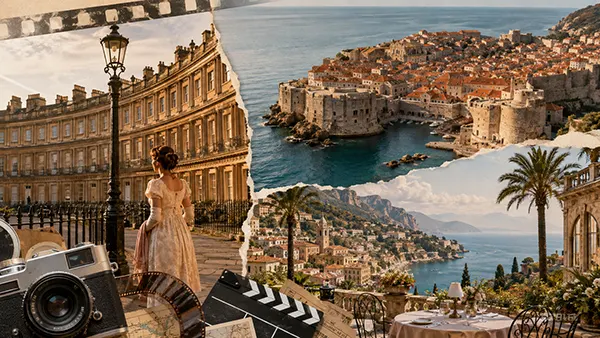
Bath remains one of Britain’s clearest examples of a historic city gaining a new audience through television. Its Georgian terraces, crescents and public buildings stand in for Regency-era London in Bridgerton. No. 1 Royal Crescent was used as the exterior of the Featherington family home, the Holburne Museum represented Lady Danbury’s residence, and the cobbled Abbey Green appeared as the area around the Modiste dress shop. Pulteney Bridge, Bath Street and the Guildhall have also been used during production. These sites are relatively close together, making the city suitable for a walking route rather than a journey between isolated locations.
Dubrovnik became internationally associated with King’s Landing after serving as its principal exterior location from the second to the eighth series of Game of Thrones. Fort Lovrijenac represented parts of the Red Keep, the city walls provided views of the fictional capital and sections of the Old Town appeared in processions, confrontations and market scenes. Other important locations include Stradun, the Jesuit Steps, Pile Gate and Trsteno Arboretum outside the city. The connection remains commercially important, with guided walks continuing to combine production stories with the history of the former Republic of Ragusa.
Taormina and several other Sicilian towns gained a new wave of international attention after the second series of The White Lotus. San Domenico Palace, now operated by Four Seasons, provided the central hotel setting, while Taormina’s streets, coastline and views across the Ionian Sea formed much of the surrounding atmosphere. The broader production also used locations in Cefalù, Noto and Palermo, allowing travellers to build a longer Sicilian route rather than remain in one resort town. The series did not create Taormina’s tourism industry, but it introduced the destination to viewers who may previously have associated Sicily mainly with older films such as The Godfather.
Recent Productions Creating New Screen-Tourism Routes
The third series of The White Lotus shifted attention from Sicily to Thailand and created one of the most prominent recent examples of television-led travel. The fictional resort shown on screen was not a single property. Four Seasons Resort Koh Samui supplied the main setting, while Anantara Bophut Koh Samui, Anantara Lawana Koh Samui, Anantara Mai Khao Phuket Villas and Rosewood Phuket contributed additional reception, dining, garden and wellness areas. Bangkok and several coastal locations also appeared. Travellers therefore need to understand that recreating the programme’s setting requires movement between Koh Samui, Phuket and the capital rather than booking one hotel.
Thailand received another major screen-tourism opportunity through Jurassic World: Rebirth, released in 2025. The Thai government subsequently identified ten filming locations across Krabi, Trang and Phang Nga for visitors interested in the production. They include Huay To Waterfall, Klong Rud, Tham To Luang Cave, Khao Khanab Nam, Khao Ngon Nak, Koh Kradan and Phang Nga Bay. Unlike a purpose-built attraction, these are natural environments with their own access conditions and conservation needs. Their value lies in combining a recent film connection with waterfalls, limestone formations, islands, caves and coastal scenery.
In Canada, The Last of Us transformed recognisable areas of Alberta into a post-apocalyptic version of the United States. The first series used more than 180 locations across the province, including central Calgary, Edmonton, Fort Macleod, Canmore, Waterton Lakes National Park and smaller communities in southern Alberta. Calgary represented parts of Boston, Fort Macleod became Austin and the Alberta Legislature Building stood in for the Massachusetts State House. Selected Alberta landscapes also returned in the second series, including Exshaw, Highway 1A and Fortress Mountain. The result is better suited to a road trip than a compact walking tour.
Long-Running Film Worlds With Lasting Tourist Appeal
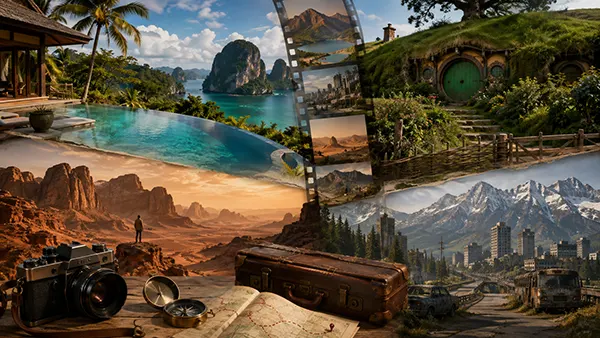
New Zealand has built one of the world’s most complete screen-tourism networks around The Lord of the Rings and The Hobbit. More than 150 locations across the North and South Islands were used during production. The best-known is the Hobbiton Movie Set near Matamata, which was rebuilt permanently for The Hobbit and now contains hobbit holes, gardens, the mill and the Green Dragon Inn. Other accessible places include Tawhai Falls in Tongariro National Park, Mount Victoria near central Wellington and Kaitoke Regional Park, which represented Rivendell. Visitors should remember that many landscapes were altered digitally, so not every view looks exactly as it appeared in the films.
Wadi Rum in Jordan has played several different worlds without losing its own identity. Its sandstone mountains, open valleys and red sand have appeared in Lawrence of Arabia, The Martian, Rogue One: A Star Wars Story, Star Wars: The Rise of Skywalker, Aladdin, Dune and Dune: Part Two. Some productions used the desert as Mars, while others presented it as an imaginary planet or historical landscape. Today, visitors usually travel through the protected area with local Bedouin guides by four-wheel-drive vehicle, on foot or by camel, often combining the route with an overnight camp and stargazing.
Northern Ireland offers a second major Game of Thrones route that differs from Dubrovnik’s urban locations. Castle Ward represented Winterfell, the Dark Hedges became the Kingsroad and coastal sites such as Ballintoy Harbour and Cushendun Caves appeared in scenes set across Westeros. The Game of Thrones Studio Tour in Banbridge adds original sets, costumes and props to these outdoor locations. Combining the studio with the Causeway Coast helps visitors understand how natural scenery, built sets and visual effects were assembled into one fictional world.
How to Plan a Screen-Tourism Trip in 2026
The first step is to establish whether a scene was filmed at a real public location, inside a private property, on a studio set or through a combination of several places. Television editing can make buildings hundreds of kilometres apart appear to be part of the same estate. The White Lotus resort in Thailand is a clear example, while many Game of Thrones interiors were created in studios even when exterior scenes were filmed in Dubrovnik. Checking this distinction before travelling prevents unrealistic expectations and helps determine how much time and transport the route requires.
Access conditions should be confirmed directly before booking. Museums, country houses and studio attractions may close on particular weekdays or require timed tickets. Luxury hotels may permit restaurant reservations but not casual access to guest areas. Natural locations can be affected by weather, path maintenance, fire risk or conservation restrictions. Seasonal conditions are especially important in Alberta, Wadi Rum, New Zealand’s national parks and Thailand’s coastal provinces, where heat, snow or heavy rain can change the practical experience considerably.
A sensible itinerary should treat the screen connection as one part of the destination rather than the only reason to be there. Two or three Bridgerton sites can be combined with Bath’s Roman Baths and architectural history. A Dubrovnik route can include the city’s maritime heritage and nearby islands. A Wadi Rum visit should acknowledge Bedouin culture and the area’s archaeological record rather than viewing the desert solely as a science-fiction backdrop. This approach creates a more substantial journey and reduces disappointment when a filming location occupies less time than expected.
Responsible Ways to Visit Famous Filming Locations
Residents continue to live and work in many of the neighbourhoods presented on screen. Abbey Green in Bath, Dubrovnik’s Old Town and central streets in Calgary are not permanent film sets. Visitors should keep entrances clear, avoid photographing through residential windows and follow restrictions in churches, museums and private buildings. Early morning or later afternoon visits can reduce pressure at compact urban sites, while travelling outside the busiest months generally provides a calmer experience and spreads income across a longer season.
Natural filming locations require particular care because popularity can damage the qualities that made them suitable for production. Marked paths should be followed in national parks, rubbish should be removed and drones should only be used where local rules permit them. In Wadi Rum, booking an authorised local guide supports safe travel through the desert and keeps more visitor spending within the community. In Thailand, waterfalls, caves and islands connected with Jurassic World: Rebirth should be visited according to current park regulations rather than treated as unrestricted photo sets.
Screen tourism is at its best when it leads travellers towards a fuller understanding of a place. Productions can introduce a destination, but local history, landscapes and communities determine whether the journey remains meaningful after the familiar photograph has been taken. In 2026, the strongest screen-inspired trips balance factual research with realistic scheduling, respect for public and private spaces and an interest in what exists beyond the frame. That balance allows popular locations to benefit from global attention without being reduced to replicas of fictional worlds.