
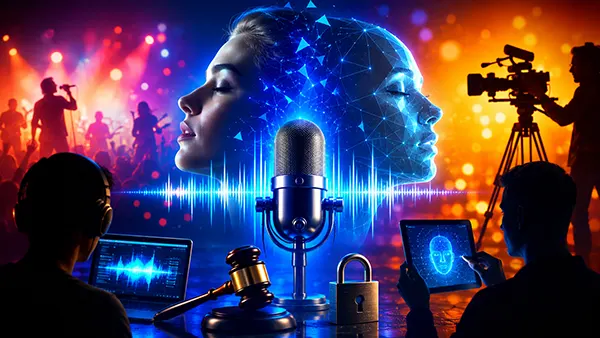
Who Owns a Star’s Voice? The New Show Business Battle for Control of Digital Identity
The rapid development of artificial intelligence has created a new challenge for the entertainment industry. In 2026, a celebrity’s voice, face, manner of speaking and even emotional expression can be replicated with remarkable accuracy using generative technologies. What once belonged exclusively to the performer is now becoming a digital asset that can be copied, licensed, sold or misused. This shift has sparked a growing debate across music, film, television and advertising about ownership, consent and the future of personal identity in the digital age.
How AI Replication Technology Changed the Entertainment Industry
Only a few years ago, creating a realistic imitation of a celebrity required expensive production resources and professional impersonators. Today, AI systems can generate convincing voice performances from a relatively small amount of audio data. Advanced machine-learning models are capable of reproducing accents, emotional tones and speech patterns that closely resemble the original performer.
The music industry has been particularly affected. AI-generated songs using synthetic versions of famous singers’ voices have appeared on streaming services and social media. Some tracks have attracted millions of listens before rights holders requested their removal. These incidents have forced record labels to reconsider how intellectual property laws apply to voices that are not protected in the same way as songs or recordings.
Film studios and production companies have also embraced digital replicas for practical reasons. Actors can now license digital versions of themselves for dubbing, localisation projects and post-production work. While this can reduce costs and expand creative opportunities, it also raises concerns about where the limits of such use should be drawn.
The Rise of Voice Cloning as a Commercial Asset
A celebrity voice is increasingly viewed as a valuable commercial product. Major talent agencies are negotiating agreements that include provisions governing AI-generated content, voice licensing and digital reproduction rights. These contracts often specify where and how a performer’s voice may be used, as well as compensation structures for future AI-driven projects.
Several technology companies have launched services that allow creators to generate authorised digital voices based on agreements with artists. In these cases, performers receive royalties whenever their licensed voice is used commercially. This approach attempts to balance innovation with fair compensation.
At the same time, unauthorised voice cloning remains a significant problem. Deepfake recordings have been used to create fake interviews, misleading advertisements and fabricated public statements. For celebrities, the reputational risks can be substantial, particularly when audiences struggle to distinguish between authentic and synthetic content.
The Legal Battle Over Digital Identity Rights
Legislation has struggled to keep pace with technological development. Traditional copyright law protects creative works, but a person’s voice, appearance or mannerisms often fall into a more complex legal category. Different jurisdictions have adopted varying approaches, creating uncertainty for global entertainment businesses.
In the United States, the right of publicity has become a central legal tool for performers seeking protection. This legal concept grants individuals certain rights over the commercial use of their name, likeness and other identifiable characteristics. However, the scope of these protections varies from state to state, leading to ongoing legal disputes.
Across Europe, privacy laws and personal data regulations play a significant role in determining how biometric information can be collected and used. Regulatory bodies have increasingly focused on AI-generated content that involves identifiable individuals, particularly when consent is absent or unclear.
Why Consent Has Become the Key Issue
Consent sits at the centre of nearly every discussion surrounding digital identity. Industry professionals increasingly argue that performers should have full control over whether their voice, image or digital likeness can be replicated by AI systems.
Recent collective bargaining agreements within the entertainment sector have introduced stronger safeguards. Many actors, voice artists and musicians now negotiate specific clauses that require explicit approval before digital replicas can be created or reused. These provisions are becoming standard practice in major productions.
The debate extends beyond living performers. Estates representing deceased celebrities have become active participants in negotiations involving digital recreations. Questions about who controls a performer’s identity after death remain among the most controversial issues facing the industry in 2026.
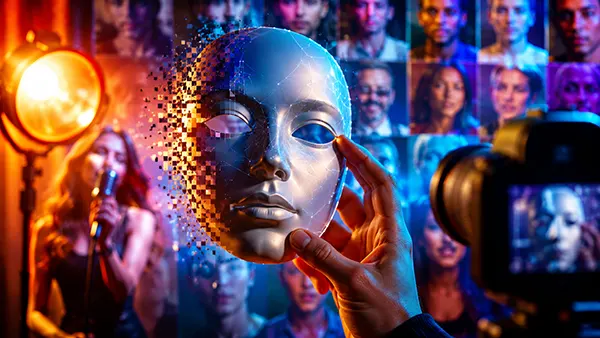
The Future of Celebrity Identity in an AI-Driven Era
The next phase of the entertainment industry will likely involve a combination of technological innovation and stricter regulation. Rather than attempting to stop AI development, many industry leaders are focusing on creating frameworks that allow responsible use while protecting individual rights.
Digital identity management is emerging as a specialised field. Agencies, lawyers and technology providers are developing systems that track authorised uses of celebrity voices and likenesses across multiple markets. These tools aim to improve transparency and reduce unauthorised exploitation.
Audiences are also becoming more aware of synthetic media. Clear labelling requirements, authenticity verification systems and digital watermarking technologies are increasingly being used to help distinguish genuine performances from AI-generated reproductions.
Who Will Ultimately Control the Digital Self?
The answer remains uncertain. Entertainment companies, technology firms, lawmakers and performers all have competing interests. The challenge lies in establishing rules that encourage creativity without allowing individuals to lose control over their personal identity.
Many experts believe the future will involve licensing models that treat digital identities similarly to intellectual property assets. Under such systems, performers would maintain ownership while granting limited permissions for commercial use. This could provide both legal clarity and economic opportunities.
What is clear is that a celebrity’s voice is no longer merely a natural characteristic. In 2026, it has become a strategic asset at the centre of one of the most significant legal, technological and commercial battles in modern show business. The outcome of this struggle will influence not only celebrities but anyone whose identity can be replicated in the age of artificial intelligence.