New Celebrity Privacy: How Public Figures Protect Personal Lives Under Constant Digital Surveillance
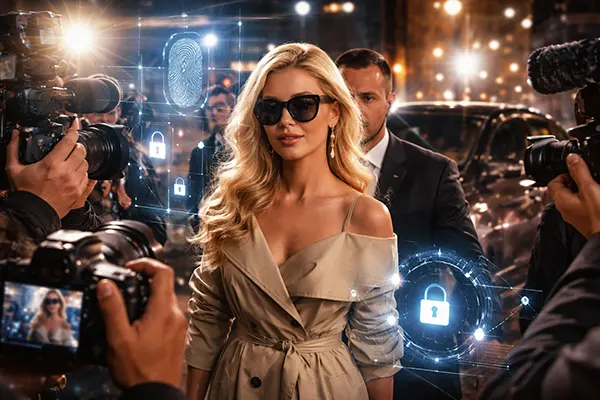
The boundaries between public image and private life have shifted dramatically over the past decade. By 2026, celebrities operate in an environment where every movement can be tracked, analysed, and monetised. Paparazzi culture has evolved into algorithmic monitoring, fan investigations, and data leaks. As a result, public figures are no longer relying solely on traditional secrecy; they are building structured, multi-layered privacy strategies that combine legal, technical, and behavioural approaches.
Digital exposure and the new risks for public figures
The modern celebrity is exposed not only through media coverage but through digital footprints created by everyday tools. Smartphones, location services, fitness trackers, and social media interactions generate continuous data streams. Even seemingly harmless actions, such as tagging a location or posting a delayed photo, can reveal patterns of movement that compromise safety and privacy.
One of the most significant risks in 2026 is the rise of data aggregation. Individual pieces of information may appear insignificant, but when combined, they create detailed profiles. Investigative fans and third-party data brokers often reconstruct travel routes, personal relationships, and routines using open-source intelligence techniques. This has turned privacy protection into a proactive discipline rather than a reactive measure.
Information leaks are no longer limited to hacked accounts. Insider threats, compromised service providers, and even AI-generated reconstructions of private content have become common concerns. Public figures now treat their personal data similarly to corporate assets, recognising that reputational damage can occur long before any official confirmation of a leak.
How surveillance culture reshapes celebrity behaviour
Public figures increasingly adjust their behaviour to reduce traceability. This includes limiting real-time posting, avoiding predictable routines, and separating personal and public devices. The concept of “digital silence windows” has become widespread, where celebrities deliberately delay sharing content to prevent real-time tracking.
Another adaptation is the use of controlled environments. Private events, secure transportation, and restricted-access venues are now standard for high-profile individuals. Even casual meetings are often planned with privacy in mind, including location shielding and guest confidentiality agreements.
There is also a psychological shift. Celebrities are more aware that privacy is not a default state but a managed condition. This awareness influences how they communicate, form relationships, and engage with audiences, often leading to a more curated and strategic public presence.
Tools and technologies used to protect personal information
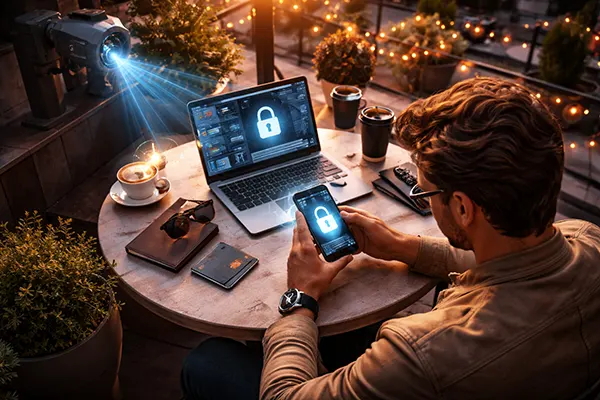
By 2026, privacy protection for celebrities relies heavily on advanced technology. Encrypted communication tools are standard, replacing traditional messaging apps. These solutions offer end-to-end encryption, metadata protection, and self-destructing messages to reduce the risk of interception or unauthorised access.
Another important development is digital identity management. Public figures often maintain multiple controlled identities for different contexts, including professional, private, and operational use. This segmentation reduces the likelihood of cross-referencing data and limits exposure if one channel is compromised.
Artificial intelligence also plays a dual role. While it can be used to generate deepfakes or track behaviour, it is equally employed to detect threats. AI-driven monitoring systems analyse mentions, unusual data patterns, and potential leaks in real time, allowing teams to respond before information spreads widely.
Legal and professional privacy frameworks
Legal protection has evolved alongside technology. Celebrities now work with specialised legal teams focused on data protection, defamation, and digital rights. Contracts often include strict confidentiality clauses, covering not only employees but also temporary collaborators and service providers.
Non-disclosure agreements have become more detailed and enforceable, often including penalties linked to digital breaches. In some cases, biometric verification is used to track access to sensitive information, ensuring accountability within inner circles.
Professional privacy consultants are now a standard part of celebrity management. These experts audit digital exposure, recommend behavioural changes, and coordinate with cybersecurity teams. Their role mirrors that of risk managers in corporate environments, reflecting the increasing complexity of personal data protection.
Balancing visibility and privacy in a connected world
Despite the risks, public figures cannot completely withdraw from visibility. Their careers depend on audience engagement, media presence, and brand partnerships. The challenge lies in maintaining relevance while controlling what is shared and how it is interpreted.
One effective approach is narrative control. Instead of reacting to leaks or speculation, celebrities proactively shape their public image through planned disclosures. This includes controlled interviews, curated social media content, and strategic collaborations that reinforce a consistent message.
Transparency, when used selectively, can also strengthen trust. By sharing certain aspects of their lives on their own terms, public figures reduce the incentive for invasive investigation. This approach shifts attention from unauthorised information to officially presented narratives.
The future of celebrity privacy strategies
Looking ahead, privacy strategies are expected to become even more sophisticated. Decentralised data storage, personal data ownership frameworks, and stricter global regulations will likely play a key role in reshaping how information is managed.
There is also a growing emphasis on digital literacy within celebrity teams. Understanding how data flows, how algorithms interpret behaviour, and how information spreads is becoming essential for maintaining control over personal boundaries.
Ultimately, privacy in 2026 is not about complete secrecy but about informed control. Public figures who successfully navigate this landscape treat their personal lives as structured assets, combining technology, legal tools, and strategic communication to maintain balance under constant digital observation.